
Flutter App Development
Build a consistent application for iOS and Android from a shared codebase. Flutter can be a strong choice for startups that need a polished interface, efficient cross-platform delivery and control over the visual experience.
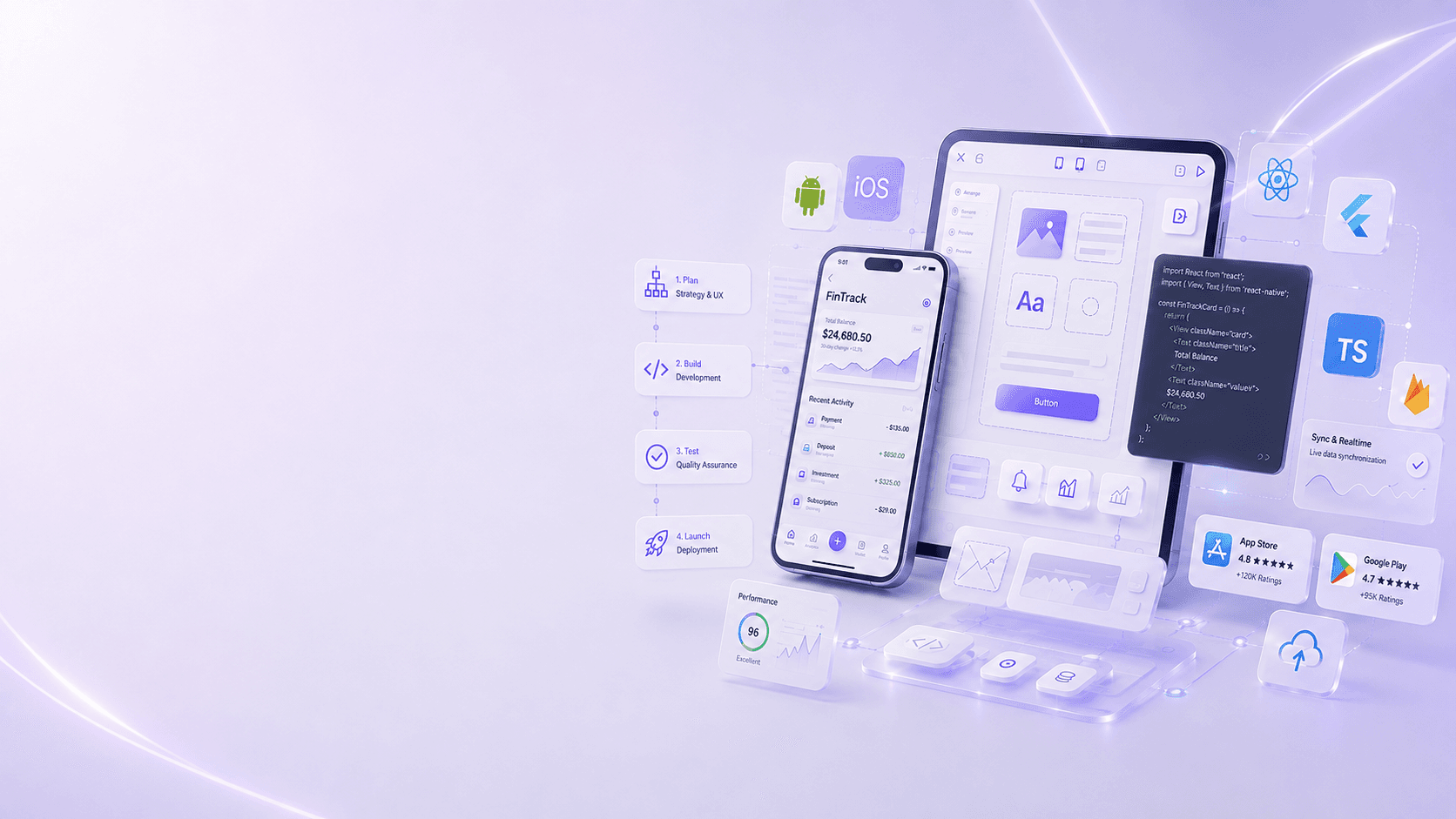
We build polished mobile applications for iOS and Android using Flutter and React Native, supported by reliable backends and APIs.
From an early product idea to a launch-ready application, we help startups plan, design and build cross-platform mobile experiences supported by the backend services they need.
Launching an app involves more than writing code. The product needs a focused purpose, clear user journeys, a practical first release and a technical foundation that can support future improvements.
Morrow works with startups and founders to shape requirements, prototype the experience and develop cross-platform mobile applications for iOS and Android. We use Flutter or React Native when those technologies fit the product, timeline and long-term maintenance requirements.
Build a consistent application for iOS and Android from a shared codebase. Flutter can be a strong choice for startups that need a polished interface, efficient cross-platform delivery and control over the visual experience.
Create cross-platform mobile applications using the React ecosystem. React Native can suit products that need reusable development patterns, integrations with web technologies or access to a broad package ecosystem.
Turn a validated idea into a focused first release. We help define essential features, remove unnecessary complexity and prepare an MVP that can be tested with real users before a larger investment is made.
Support the mobile experience with authentication, databases, user roles, notifications, dashboards, third-party integrations and APIs designed around the product’s requirements.
There is no single framework that is automatically right for every app. The decision should follow the product requirements rather than a technology trend.
Flutter may suit products that need a highly controlled, consistent interface across platforms. React Native may suit teams that want to work within the React ecosystem or share relevant knowledge with an existing JavaScript product team.
Before recommending either approach, we consider the required features, integrations, performance expectations, delivery timeline, available budget and plans for maintaining the product.
A useful mobile app often depends on reliable systems behind the interface. We can plan and build the backend services needed to manage data, user access and connections with other platforms.
Define the users, product goal, essential features, dependencies and practical scope for the first release.
Organize key screens and user journeys before full development so unclear requirements can be resolved early.
Select the cross-platform framework, backend approach, integrations and delivery structure that fit the approved scope.
Build the mobile interface, backend services and integrations in clear stages that can be reviewed throughout the project.
Test important user journeys, integrations, error states and release builds against the agreed device scope.
Prepare the application for Apple App Store and Google Play submission, then define post-launch maintenance.
Requirements, responsibilities, deliverables and dependencies are agreed before development starts.
The app and backend are organized so future fixes and features can be planned responsibly.
Critical journeys and integrations are checked against the device scope agreed for the project.
Source access, design assets, credentials, documentation and ownership terms are defined in the scope.
The cost of a mobile application depends on the work required to design, build, test and maintain it. A focused MVP is different from a platform involving several user roles, payments, real-time data and external systems.
Morrow provides mobile app development services for startups and founders across Pakistan through a remote-first process. Requirements, prototypes, progress reviews and approvals are documented so the project does not depend on being in the same city.
Yes. Morrow develops cross-platform applications for iOS and Android using Flutter or React Native. The recommended framework depends on the product requirements and long-term maintenance plan.
Yes. We can help define the first release, organize the essential user journeys, prepare the UI/UX and develop a focused MVP for testing and feedback.
Yes. Where required, the project can include backend services, databases, authentication, user roles, dashboards and third-party API integrations.
The timeline depends on the features, design requirements, integrations, testing scope and readiness of the requirements. We provide a timeline after reviewing the scope instead of promising one schedule for every app.
Cost depends on the product scope, UI/UX work, backend requirements, integrations, supported platforms and maintenance needs. Morrow reviews the requirements before providing a tailored estimate and explaining the main cost drivers.
Yes. Morrow can support release preparation and submission for the Apple App Store and Google Play. Approval remains subject to each platform’s policies and review process.
Yes, after reviewing the existing codebase and identifying the underlying problems. We recommend improvement where practical and propose rebuilding only when the current foundation cannot reasonably support the required work.
Share the problem your app should solve, who will use it, the essential first-release features and whether you need iOS, Android or both. Existing designs, integration requirements and a target budget or launch window help clarify the scope. A complete technical specification is not needed to start the conversation.
New requirements should be assessed against the agreed release scope. A small adjustment may fit the current plan, while a new feature can affect design, development, testing, cost and timing. Agree which changes belong in the first release and which can wait before expanding the work.
Depending on the product, ongoing costs can include backend hosting, database storage, third-party APIs, messaging services, developer accounts and maintenance. Usage-based services may cost more as the app grows. The estimate should distinguish development work from external charges and identify who manages each account.
Agree the handover requirements before development starts: source-code access, design files, build and setup instructions, backend documentation and access to the relevant service accounts. Ownership terms, third-party licences and any ongoing support responsibilities should be recorded in the project agreement.
Post-launch support can cover agreed bug fixes, operating-system compatibility updates and planned feature improvements. The maintenance scope is defined separately so responsibilities remain clear.
Tell us about your app development needs. We'll come back with a clear assessment and a path forward.